Lap, Board and Batten, Panels, Shingles & Architectural Lines
1. What We’re Reviewing (And Why Hardie Is Everywhere)
This is a design-focused review of James Hardie fiber cement siding, particularly the profiles most commonly used in Sea-to-Sky exterior renovations: lap siding, board and batten, panel systems with aluminum trim, shingle profiles, and a brief look at the more premium architectural offerings.
James Hardie is not a niche product. It is globally distributed, and frequently recommended in coastal climates. In Squamish and Whistler, it appears on everything from modest remove-and-replace renovations to carefully designed contemporary homes and multifamily buildings.
Its popularity is partly performance-driven. Fiber cement resists rot, insects, and fire. It tolerates damp seasons with less maintenance, and holds paint reliably for about a decade.
However, this article is about design considerations when looking at Hardie for your siding project.
Hardie is often treated as a default siding solution, and yet within the category there are significant differences in proportion, texture, shadow, and architectural tone. Within just the Hardie ecosystem you can create an exterior which reads traditional, contemporary, coastal, restrained, or slightly confused.
2. A Brief Context: Why Hardie Became So Dominant
Fiber cement siding rose to prominence as an alternative to wood in climates where moisture and fire exposure are ongoing concerns. Over time, its consistency and relative predictability made it a favorite of production builders and custom designers alike.
Globally, Hardie is now a 14 billion dollar market cap company, nstalled across North America, Australia, and parts of Europe, and its catalog reflects that reach. The brand’s strength lies not just in durability, but in offering a wide range of profiles that mimic traditional materials while requiring less upkeep.
3. Lap Siding: 7" and 8", Smooth vs CedarMill
Lap siding is the most recognizable Hardie profile, and in Squamish it remains the most common.
The reveal — typically 7 inches — defines the rhythm of the façade. A 7-inch reveal produces a slightly tighter, more traditional cadence. An 8-inch reveal reads marginally more contemporary, especially on larger homes where broader repetition simplifies the wall.
On a modest craftsman-style home with deep eaves and layered trim, the 7-inch reveal often feels right. On a modernized 1990s renovation seeking cleaner lines, the 8-inch reveal can reduce visual busyness and align better with simplified window casings.
Texture matters as much as reveal.
CedarMill (the wood-grain embossed option) introduces surface variation and shadow depth. Even when painted, it retains a softening, nostalgic effect. Smooth lap siding removes that texture entirely, emphasizing geometry over grain.
If you are unsure which to choose, consider your preference along the spectrum of modern versus rustic, clean versus crafty, contemporary versus classic. And consider what other textures you have in your exterior that you will be retaining. For reference, a classic remove and replace, swapping cedar for fiber cement and making minimal changes to the rest of the exterior will choose CedarMill.
4. Board and Batten: Scale Is Everything
Board and batten has surged in popularity over the past decade, particularly in Sea-to-Sky renovations that aim to modernize traditional forms.
Hardie’s board and batten assemblies are typically configured using panel sheets with applied battens at 8, 16, or 24 inches on center.
An 8-inch spacing creates a tight vertical rhythm that feels quite traditional and can read farmhouse if paired with appropriate trim and colour. (When we sided with wood, the ‘boards’ underneath the ‘battens’ did not easily come in very wide widths, so narrow spacing was the norm.) These days, 8” is a decisive choice, and significantly adds cost — the build requires 3x the amount of trim as a 24” batten project.
A 16-inch spacing is often the most balanced in residential settings. It introduces verticality without overwhelming the façade. If you don’t have a strong preference pulling you one way or the other, choose 16 as the default.
At 24 inches on center, the vertical rhythm becomes broader and more contemporary. This spacing works best on simple wall planes and taller elevations. It is harder on the install crew because fewer battens must now be integrated appropriately with openings, gables, and corners, so precise layout becomes critical.
The mistake I see most often is selecting board and batten for stylistic reasons without considering the existing geometry of the home. Vertical emphasis elongates façades. On already tall, narrow gables, it can exaggerate height. On low, wide homes, it can rebalance proportion effectively.
Board and batten is less forgiving around window groupings. The battens must land intentionally relative to openings. When spacing is improvised on site rather than coordinated during layout, the façade loses compositional clarity, particularly with wide spacings.
5. Panel Systems and EZ Trim
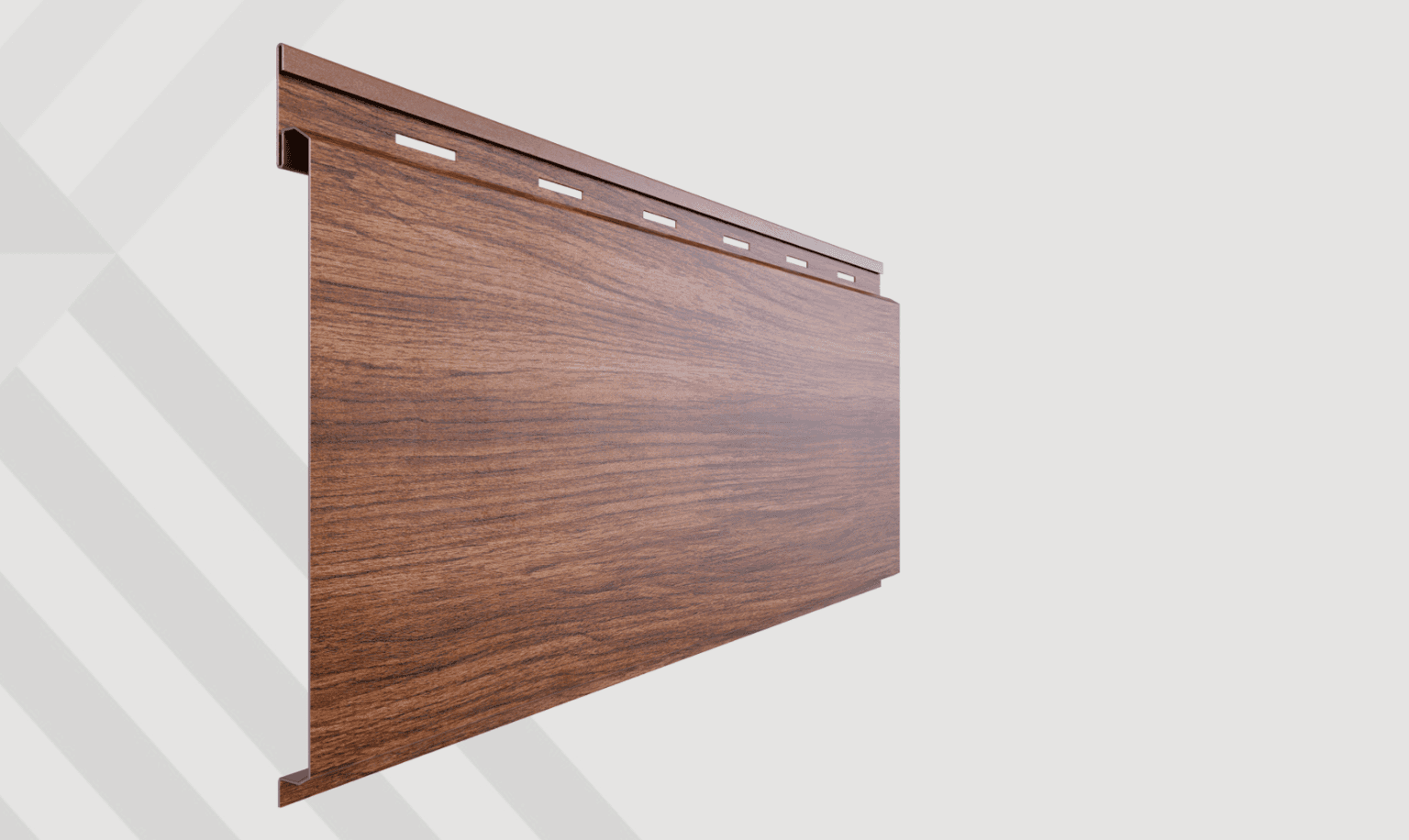
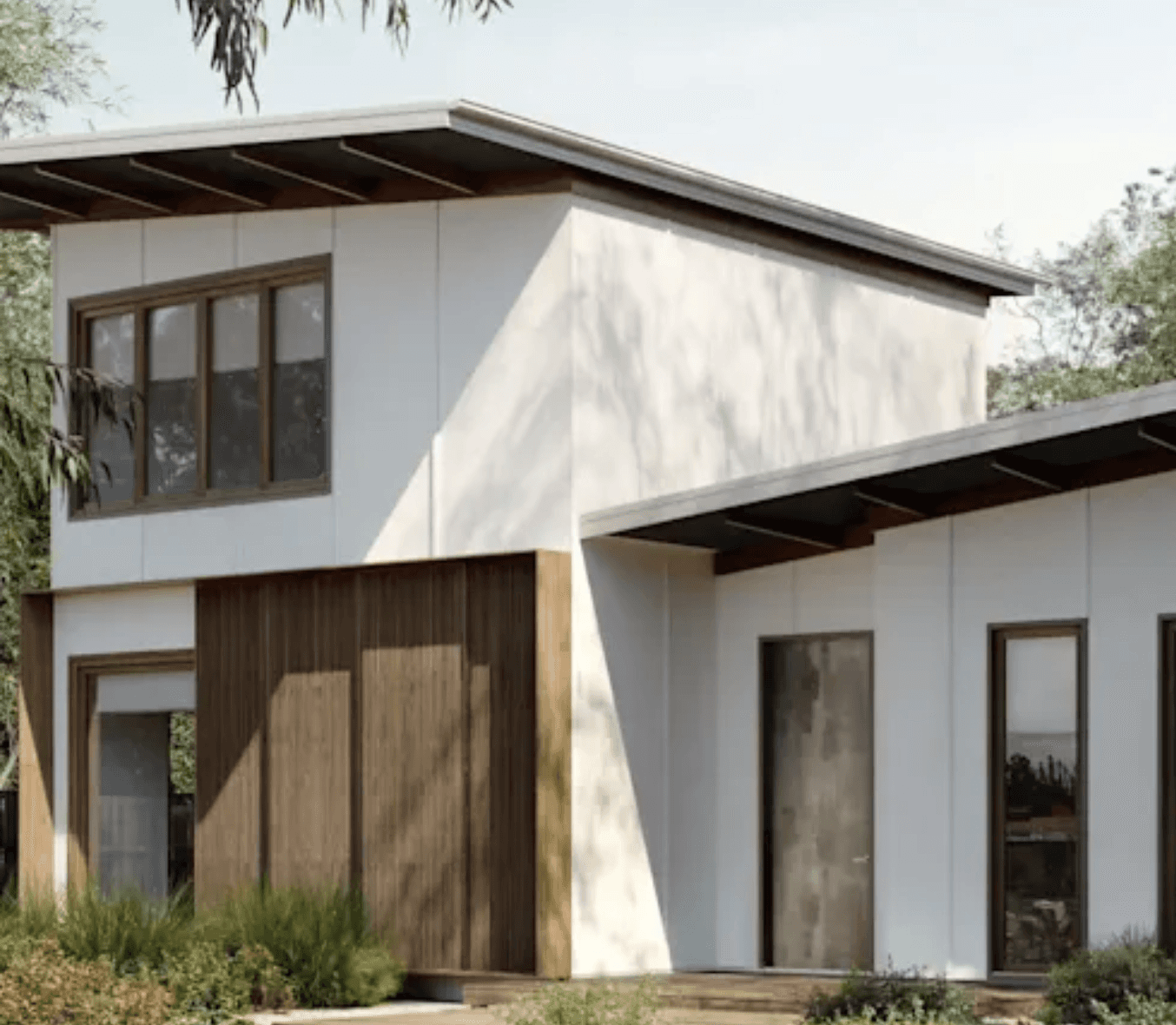
Hardie panel systems, often paired with EZ Trim extruded aluminum reveals, offer a distinctly modern aesthetic. The panels create large, flat fields. The aluminum trim introduces precise shadow lines between sheets, allowing for horizontal or vertical grid compositions. You see this in Crumpit Woods and the University developments, as well as on multifamily new builds.
When executed carefully, this system feels architectural and disciplined. It can work beautifully on contemporary renovations in Squamish, especially when paired with simplified window trim and restrained colour palettes.
However, panel systems require coordination.
Sheet layout, trim alignment, and fastener concealment must be planned before installation. Every reveal line is intentional, and misalignment is difficult to ignore.
Compared to lap siding, panel systems reduce surface texture but increase compositional responsibility. They are less about mimicry of traditional materials and more about surface order.
These should always be done with Smooth panels rather than CedarMill, and depending on your floor height you can achieve 10’ gaps between breaks in the facade.
6. Shingle Profiles
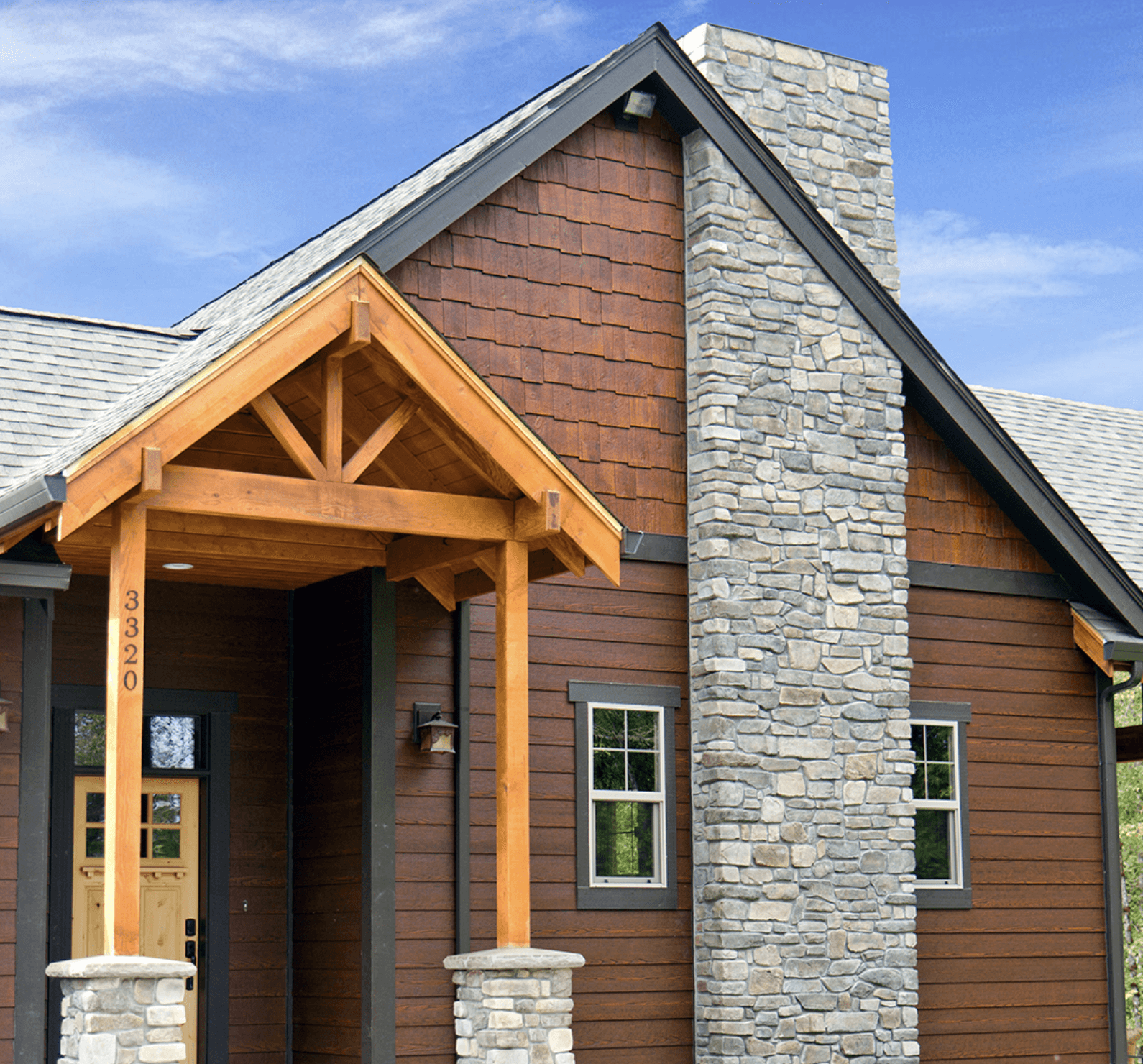
Hardie shingle siding is frequently used in gable ends or as accent cladding on traditional homes.
Straight-edge shingles maintain a consistent horizontal bottom line and tend to feel cleaner. Staggered-edge shingles introduce variation and a more explicitly traditional, coastal tone.
In Squamish and Whistler neighborhoods where craftsman and coastal influences overlap, shingles can soften an otherwise rigid façade. However, overuse can push a renovation toward pastiche if not balanced with simpler wall planes. In more neutral colors, like Like Mist, you can do your whole house in shingle. In darker wood tones, unless you’re really trying to attain a cottage or chalet look, they work best as accent pieces.
Shingles add visual density. They reduce perceived scale by breaking the façade into smaller units. This can be beneficial on large homes that need softening, but excessive application on smaller homes can feel busy.
7. Architectural Panels and Premium Profiles
Beyond standard lap and panel offerings, Hardie now produces architectural lines, including larger-format panels and design-forward series geared towards minimalist aesthetics.
These products tend to emphasize scale and simplicity. Larger panels reduce joint frequency and create broad, uninterrupted surfaces. When paired with thin trim and neutral palettes, they can achieve a refined, contemporary result.
They also require budget confidence: these are a large jump up in price.
Artisan shiplap — Hardie’s thicker, deeper-shadow variant — sits at the upper end of the fiber cement category. It is visually excellent, with substantial shadow lines and depth. The product itself is much thicker and heavier, essentially occupying a different category altogether from standard fiber cement offerings. It is also considerably more expensive, both in material and labour.
When budget allows and the design intent supports a strong horizontal rhythm, artisan shiplap can elevate an otherwise standard façade. Homeowners should be confident when making this choice: the samples don’t justify the upgrade, but there is an experiential difference in a home clad in these premium architectural sidings.
8. How Hardie Compares to Other Cladding Categories
Fiber cement occupies a middle ground.
Compared to wood, it offers less organic variation but greater consistency. Compared to metals, it is warmer and more adaptable across architectural styles.
Hardie does not impose a strong identity on a home. Instead, it allows reveal width, texture, and colour to do most of the expressive work. However, in Squamish, it is very familiar, so even a creative, well-developed facade is unlikely to pop out at the street view level. Squamish has been steadily moving away from Hardie over the last few years, so if true curb appeal is your target it’s going to take a very thoughtful build if you’re using exclusively Hardie. However, blending these products with some more contemporary products has been a sweet spot of design lately.
9. What I Recommend
For renovation projects in Squamish, lap siding remains the most common and versatile Hardie profile.
Board and batten works best when the home’s massing supports vertical emphasis and when batten spacing is resolved before material ordering.
Panel systems are most successful on clean, modern geometries where reveal alignment can be drawn precisely.
I hesitate when siding profiles are selected based solely on trend without regard for proportion or the house they are being applied to. Fiber cement can look excellent. It can also, and frequently does, look generic if applied without design intent.
I like at least one feature wall, and a higher end cornice (soffit/fascia/gutter system) when cladding in Hardie these days.
10. A Beginner’s Framework for Designing with Hardie
If you are approaching Hardie siding for the first time, consider working through the following sequence:
First, define the architectural direction — traditional, transitional, contemporary.
Second, select profile — lap, batten, panel, shingle — based on proportion and rhythm, considering two or three profiles for your home, depending on its size.
Third, choose reveal width and spacing deliberately instead of defaulting to baseline dimensions.
Fourth, decide on texture — smooth or cedar grain — based on the original architectural direction you’ve chosen.
Finally, select colour in natural light, ideally reviewing real life projects along with your samples.
Hardie siding is a flexible system of profiles and scales. In the Sea-to-Sky, where Hardie has been king for so long, new remodels should consider Hardie builds only if they are thoughtfully compiled, and preferably in combination with one or two more stand-out elements.
Frequently Asked Questions - Siding with Hardie in Squamish
How do I know which Hardie profile suits my style?
Generally speaking, the more smooth, clean, monolithic, minimalist and large the sidingp profile is, the more it speaks in modernist tones. Alternatively, the more intricate and textured the profile is, the more it will align with craftsman-style designs.
A thoughtful design process with a builder usually includes at least one focused meeting dedicated entirely to material handling — reviewing elevation drawings, discussing reveals and trims, and considering vertical or horizontal orientations. If your contractor moves directly from “Which siding do you want?” to pricing without that intermediate conversation, it is worth slowing the process down.
Profile decisions are architectural decisions. They benefit from spending time with the materials beyond online research.
Should I be looking at large samples, or are small swatches enough?
Small samples are helpful for initial narrowing, but subtleties only start to stand out when you look at a 1000 square foot wall facet. Fiber cement profiles, particularly profile depth and texture (smooth versus CedarMill), read very differently at scale.
In a well-structured renovation process, homeowners are often provided with larger sample boards or encouraged to view real life projects where possible. Seeing how light hits a wider field of material is useful.
It is reasonable to expect your contractor to facilitate that experience rather than relying solely on brochure imagery.
How important is colour consultation for Hardie siding?
Squamish seems to have fallen into some distinct colour trends over the last few years — Hardie’s Iron Gray was a standout, as was Deep Ocean blue, Midnight Black, and Arctic White. But the Color Plus catalogue runs to 25 colours, the Magnolia Collection add 16 more, and we also like both Fisher Coatings and WoodTone’s Rustic Series woodgrain coatings. And custom paint is always an option too.
That’s a lot of options, even though it’s just a few curated collections. Structured colour consultation — whether in-house or with a design professional — helps evaluate siding, trim, soffit, and door colours together rather than in isolation. Reviewing samples against your actual roof and window finishes is far more reliable than choosing from a manufacturer’s chip.
Many design-build firms now incorporate dedicated colour sessions into their preconstruction phase.
Can 3D modeling or renderings really help with siding decisions?
Yes. As AI rendering becomes more popular everyday, homeowners can get for free what used to be an expensive add on service.
Fiber cement is deceptively flexible. A 7-inch lap can feel noticeably more traditional than an 8-inch reveal once visualized across an entire façade. Vertical battens at 16 inches on center will read very differently than at 24 inches when viewed in elevation.
Three-dimensional modeling or digital renderings allow homeowners to test those differences before materials are ordered. Increasingly, AI-assisted renderings can simulate colour and profile changes with surprising clarity, though they still require professional interpretation.
How do I avoid ending up with a “generic” Hardie house?
Hardie can look excellent or unremarkable depending on how intentionally it is applied.
Generic results often stem from defaulting to common reveal widths, standard batten spacing, or widely used colours.
A design process that includes reviewing comparable local homes — ideally through a contractor’s portfolio of completed projects — can be helpful. Seeing finished addresses in Squamish or Whistler allows you to evaluate scale, colour, and profile in real context rather than imagining them abstractly.
Asking for examples of similar homes your contractor has completed is not about comparison shopping, it’s just a great way to see how these things turn out under their guidance.
What level of design guidance should I expect from my contractor?
At minimum, you should expect:
A clear discussion of architectural direction before material selection
Review of profile options in relation to your specific home
Access to meaningful sample handling
Colour coordination across siding, trim, and openings
Visual modeling or renderings when proportion changes are involved
Reference to comparable local projects