A Sea-to-Sky Homeowner’s Guide to Making Architectural Choices When Shopping for Cladding
When homeowners begin reviewing siding options for an exterior renovation in Squamish or the Sea-to-Sky, the conversation often starts with durability, maintenance, or fire resistance. Those considerations are important but this article is specifically about design.
Cladding is one of the most powerful architectural decisions you will make during a home remodel of any kind. Before comparing product warranties or installation methods, it helps to understand the basic design variables at play: material, profile, texture, colour and sheen, orientation, and how the siding integrates with trim, windows, and other claddings.
The goal is not to tell you which siding is best but to learn how to shop for siding in the first place.
1. Material
Although this post is not about performance, material selection inevitably carries visual and cultural meaning.
Steel and aluminum tend to read as controlled and modern, particularly in matte grayscale finishes. They reflect light differently than wood and emphasize shadow lines in a way that can sharpen geometry.
Fiber cement occupies a more neutral space. It can support traditional or contemporary forms depending on profile and colour. It rarely dominates the architectural conversation; although Hardie’s ‘Cedar Mill’ Lap Siding, the most popular siding in North America, is starting to read less refined than most of our Sea to Sky homeowners are interested in lately.
Wood introduces grain, variation, and warmth. Even when painted, it retains a softness that metal can not. Natural finishes amplify that warmth. Wood always reads ‘craft’ in ways that slick, seamless engineered materials do not.
Engineered woods and composite materials often attempt to balance the visual character of wood with the consistency of manufactured products. Their success depends largely on texture and finish quality. A new series from Fisher is an amazing example of a heavily engineered real wood product.
The important question is not only “What material lasts?” but rather “What material fits the architecture of this home?” A coastal contemporary house in Squamish may benefit from the restraint of metal or smooth fiber cement, while a craftsman-influenced form often feels more coherent in wood or shingle profiles.
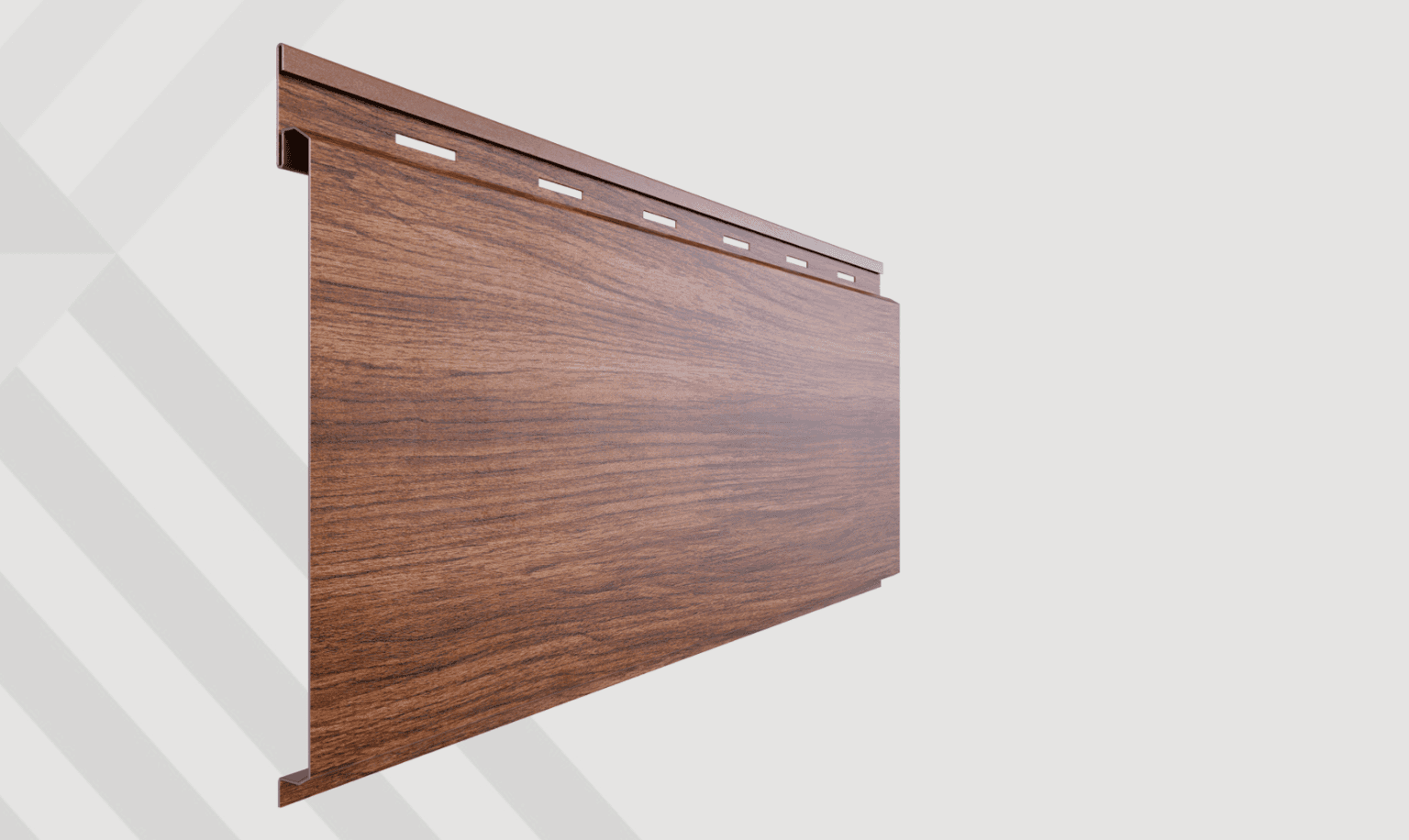
In most cases, material establishes the baseline tone and can’t really be adjusted. However, the very best new matte, woodgrain metals do give the best of both worlds — the refinement of perfectly profiles boards with a completely successful illusion of warm wood (see Mac Architectural).
2. Profile
Profile refers to the shape and repetition of the siding — lap versus shingle, ribbed versus flat, wide plank versus narrow reveal.
Horizontal lap siding introduces strong linear movement across the façade. It tends to widen perception and can make a home feel grounded. Narrow lap creates finer texture; wide lap feels more contemporary and simplified. In Squamish and Whistler where old cedar lap siding is common, and so are Hardie Lap Siding projects, this can be thought of as a baseline from which to depart. When in doubt, it will always work here.
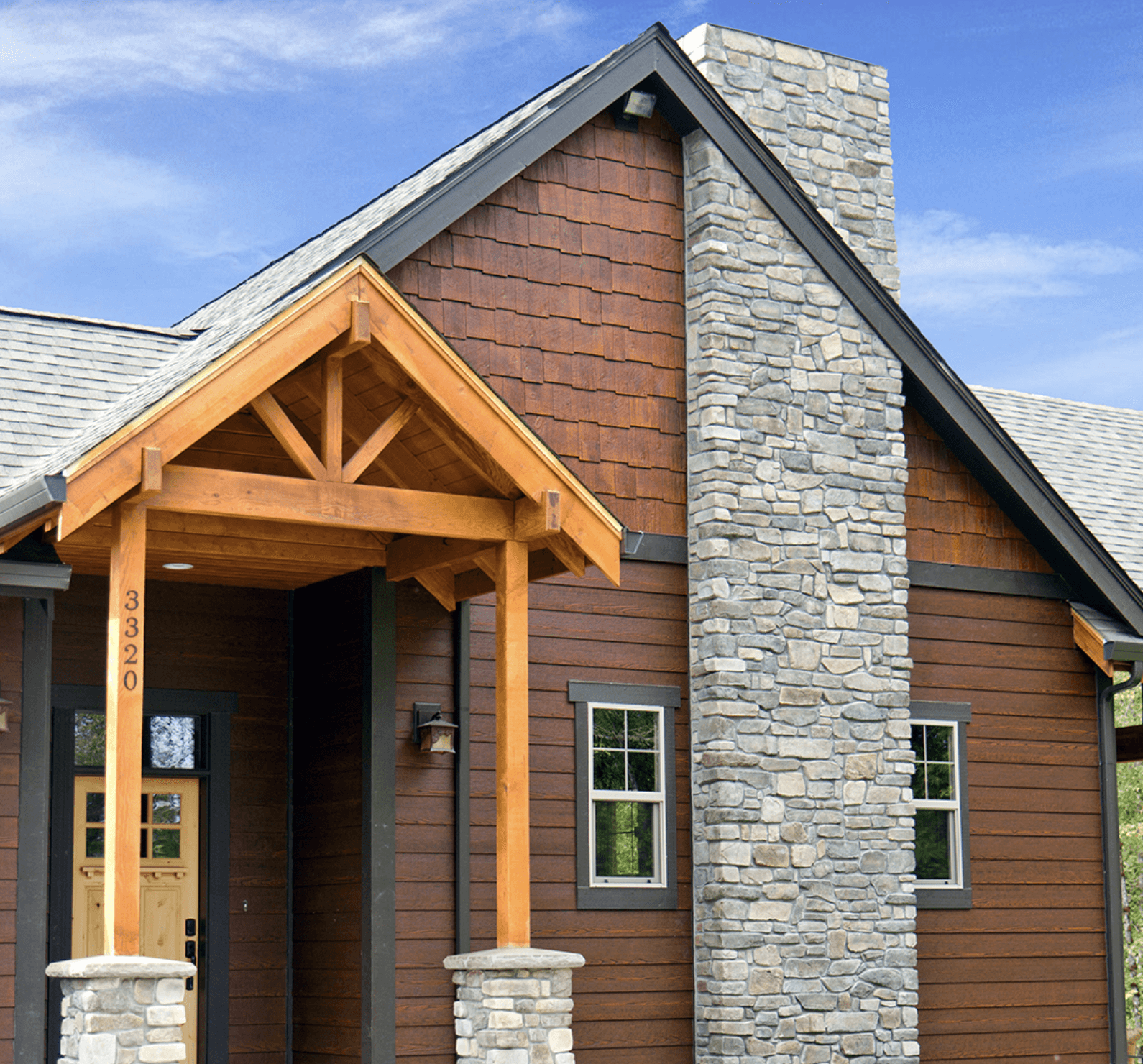
Shingle profiles introduce a different rhythm altogether. They break repetition into smaller units, often adding visual depth and a slightly more traditional or coastal tone. Mountain Chalet or Cape Cod or Rustic Cottage type experiences can all be pulled from shingle features. This can be accomplished in real cedar, Hardie Color Plus palettes, and in new wood grain treatments on top of fiber cement shingles.
Vertical ribbed metal or board-and-batten profiles shift the rhythm upward. Vertical orientation elongates façades and emphasizes height. On tall, narrow homes, this can amplify verticality; on low, wide homes, it can rebalance proportions.
Even subtle profile differences, such as traditional lap versus Dutch lap, change shadow depth and surface texture. Dutch lap’s concave curve introduces a more pronounced shadow line, which can feel slightly more decorative or traditional than flat lap.
Profile determines how light moves across the house during the day. It shapes shadow in the morning and contrast in the evening. When reviewing samples, it helps to think less about colour and more about rhythm. Modern (and expensive) profiles are currently amplifying depth and shadow with thicker materials and deeper profiles, such as with Hardie’s Artisan line.
3. Texture
Texture is often underestimated because it is subtle at sample size but it’s very powerful at scale.
Smooth cladding reads modern. It emphasizes geometry and proportion rather than surface character. In large fields, smooth finishes can feel monolithic, which is sometimes desirable. Hardie Panels with Extruded Aluminum Trim channels are a default in Squamish new builds, especially around the University, but they wouldn’t work at all in a Cedar Mill texture.
Wood grain textures — whether real or manufactured — introduce depth and irregularity. They soften light reflection and often make façades feel less severe. Most Hardie LapSiding projects in the Sea to Sky are done in a texture called ‘Cedar Mill’.
Texture also interacts with colour. A dark, smooth panel reflects differently than a dark, textured one. In Squamish’s overcast seasons, subtle texture differences can become more noticeable than they appear under showroom lighting.
The local finishing company, Fisher Coatings, has introduced two new textures called ‘band sawn’ and ‘scraped’ in some of their lines, which require some careful consideration but in the right place could have a unique effect.
4. Colour and Sheen
Colour decisions are rarely neutral.
Grayscale palettes — white, charcoal, iron ore, black — emphasize form and shadow. They tend to read contemporary. In heavily wooded settings, like in Whistler, darker tones can allow the house to recede into the landscape.
Warmer tones, such as soft taupe, muted greens, or natural wood, introduce approachability and familiarity. They often integrate more gently into mixed architectural neighborhoods. Hardie’s Monterey Taupe is a beautiful color, despite looking like a fairly boring beige at sample size.
Sheen is equally influential. Matte finishes absorb light and create a softer, more architectural appearance. Semi-gloss or high-sheen finishes reflect more light and can feel sharper or more industrial. This is important in metal siding selections: lower priced ‘SMP’ coatings are shinier, but for an uplift in cost the better quality ‘PVDF’ coatings have the additional benefit of being more matte.
The interaction between colour and profile is significant. A bold dark colour on narrow lap siding creates a different effect than the same colour on wide panels or vertical ribs. In many cases, restraint in colour allows profile and proportion to speak more clearly. Loud profiles and colors together create uncommonly bold exteriors.
5. Orientation: Horizontal, Vertical, and Mixed Strategies
Orientation changes the perceived proportion of a home more dramatically than many homeowners expect.
Horizontal siding typically reinforces width and stability. It aligns with traditional residential architecture and often feels grounded.
Vertical siding emphasizes height and can introduce modernity, particularly when paired with simplified trim. On homes with tall gables or narrow façades, vertical orientation can either enhance or exaggerate proportions depending on context.
Mixed orientation strategies — for example, vertical accent panels within a primarily horizontal scheme — can create hierarchy and visual interest. However, without careful planning, they can also feel arbitrary. We really like some degree of mixed orientation on most houses.
Orientation decisions should consider roofline geometry, window placement, and overall massing. When in doubt, do less.
6. Combining Multiple Claddings
Few exterior renovations rely on a single cladding material. Combining materials introduces contrast and hierarchy but also increases complexity.
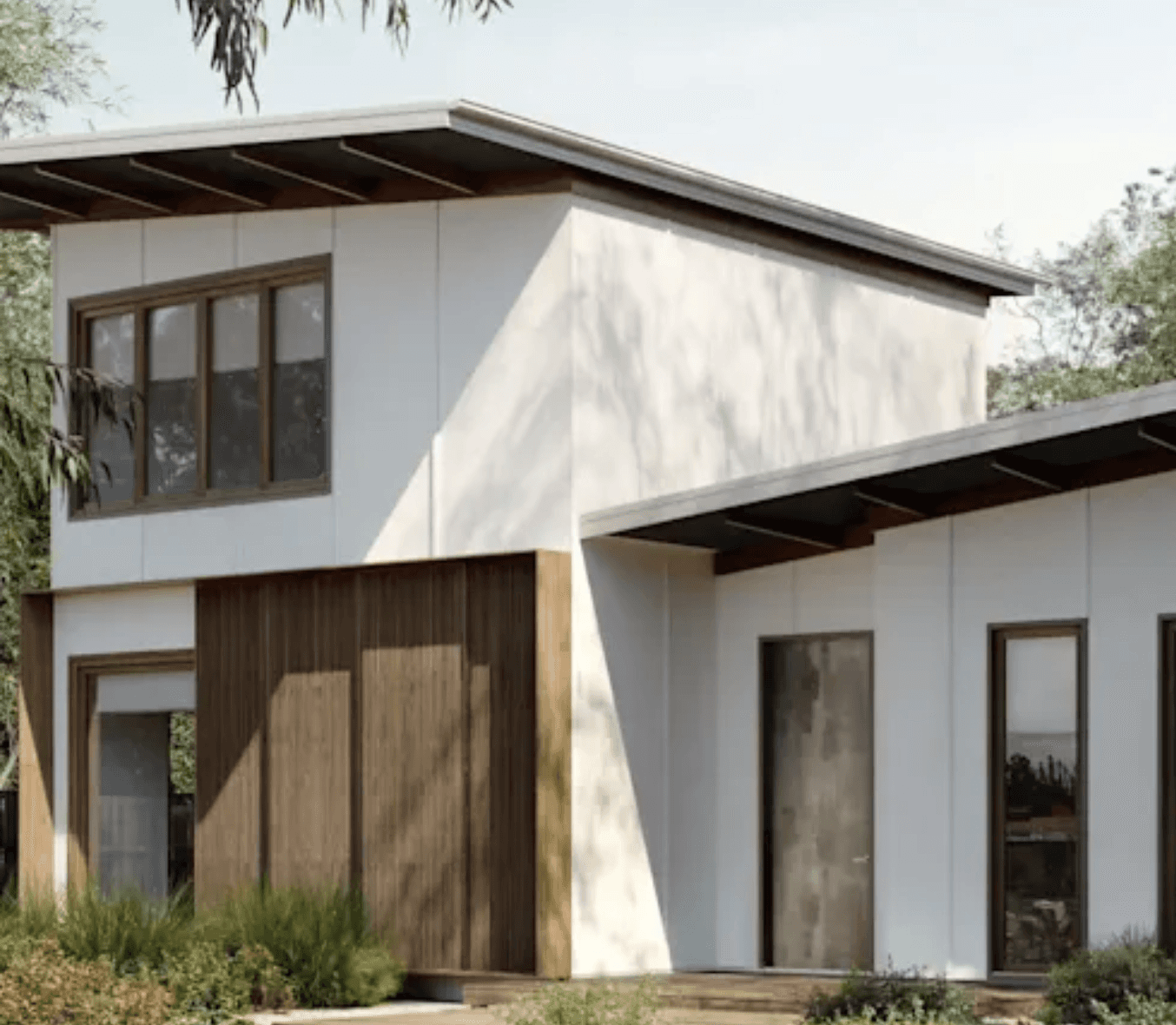
Metal paired with wood creates delightful contrast. Fiber cement board and batten or lapsiding combined with shingle accents can soften transitions and highlight gables or entries. However, each additional material introduces new junctions, shadow lines, and proportion decisions. If your contractor can’t guide a discussion with you on how to resolve those interactions, it might be better to stick with a simpler build for them.
Trim depth and window casing design become especially important when mixing materials. A minimalist cladding choice often benefits from simplified trim and monochromatic palettes, whereas more traditional profiles can support layered detailing.
Multiple claddings also allow for finessing the budget. On a corner site with lots of visibility, every facet matters and you should budget equally for each side of the house. But on many site plans, there are a couple sides which almost never get seen — why not put some lap siding on those walls and up the budget for the entryway? Done right, this doesn’t look piecemeal, and maximized the impact of budget.
These decisions are best considered before materials are ordered, as panel widths and reveal spacing influence the entire façade composition.
7. Clarifying Your Own Architectural Intent
The most common difficulty in siding selection is not technical but conceptual. Homeowners often review samples but feel lost if there’s not a guided and structured path for interpreting material.
Is the renovation an attempt to modernize? To restore traditional character? To simplify a previously layered façade? To introduce warmth? To reduce visual clutter?
Once intent is defined, material, profile, texture, and colour decisions tend to narrow naturally. If this vision and ease doesn’t come naturally to you, make sure your contractor has a thorough design-build strategy to help you make great choices.
Practical Orientation for Squamish Homeowners
When reviewing siding from a design perspective, consider asking yourself:
What architectural language am I aiming for in general? Is it compatible with the house I’m working with?
Does this material support that language, or compete with it?
How will profile and orientation change the perceived proportion (height/width) of my home?
Does the colour, texture and sheen of your material enhance the scene you’re creating or distract from it?
How will this cladding interact with existing windows and trim? (There’s no shortage of white vinyl windows to deal with in Squamish!)
Selecting cladding thoughtfully is less about finding the “best” product and more about understanding the architectural conversation you want your home to participate in.
Frequently Asked Questions: Choosing Siding for Design in Squamish
How do I choose the right siding for the architectural style of my home?
The starting point is not the product catalogue but the architectural direction you want your home to take. A 1990s craftsman-style house, for example, often responds well to lap or shingle profiles with some trim hierarchy, whereas a renovation aiming for contemporary restraint may benefit from wider plank fiber cement or vertical metal.
Clarifying whether the goal is to modernize, simplify, restore, or soften the façade usually narrows the field of appropriate materials considerably.
Should my contractor help me design and decide on siding?
A well-structured exterior renovation process should include design guidance rather than simply material pricing. Siding decisions are most successful when considered alongside trim depth, colour palette, and orientation.
Contractors who treat cladding selection as part of a broader architectural conversation tend to produce more cohesive results than those who approach it as a supply-and-install exercise. Asking how siding decisions are developed — and at what stage of budgeting they are clarified — can reveal whether design intent is being considered early enough to influence outcome.
Is it better to choose siding before or after getting a price?
Initial budgeting can begin with general material categories, but final selections ideally occur before detailed pricing is locked in. Profile width, orientation, and trim strategy all influence labour complexity and sequencing.
Can I mix siding materials without making the house look busy?
Combining materials can create hierarchy and contrast, but it requires restraint. Mixing vertical metal with wood accents, for example, can produce a balanced composition when planes are clearly defined. The key is determining which surfaces should dominate and which should support. Trim and window detailing must also adapt to the chosen materials so that transitions feel intentional rather than piecemeal.
How do I know if a siding choice will look too modern or too traditional?
Material alone rarely determines this; profile, texture, colour, and trim depth collectively shape the final impression. Smooth vertical metal in charcoal reads differently than wood grain lap in a muted green, even if both are technically “siding.”
Real life examples produce more reliable impressions than judging small showroom swatches. Squamish and Whistler are filled with amazing homes, and ideally your designer or contractor can suggest some places to drive to to see different products ‘in the wild’.
Where can I see curated siding options suitable for the Sea-to-Sky?
For homeowners who want to begin exploring materials that align with contemporary and coastal architectural contexts, our curated products page provides a focused overview of siding categories we regularly specify in Squamish and Whistler remodels.
Rather than listing every available product on the market, it narrows the field to materials that integrate well with local design language and climate realities.