Exterior Remodeling Glossary (Sea-to-Sky Edition)
Architectural & Design Vocabulary
Architectural coherence – The degree to which materials, proportions, and details work together visually.
Bay window – A projecting window assembly extending outward from the main wall.
Belly band – A horizontal band between floors or cladding types that separates materials.
Bow window – A curved or multi-panel projecting window forming a gentle arc.
Cornice return – The short horizontal return of trim at the edge of a gable roof that finishes the roofline.
Fenestration – The arrangement and design of windows and openings on a façade.
Frieze board – A horizontal trim under the soffit that transitions wall siding to roofline.
Ground band – A horizontal trim that visually divides elevation zones or transitions materials.
Material palette – The combination of claddings, trims, and finishes that define the exterior’s character.
Orientation – The direction cladding is installed (horizontal vs. vertical), which influences proportion and architectural intent.
Parapet – A low wall extending above the roofline, common on flat or modern roofs.
Profile – The cross-sectional shape of siding that defines reveal, shadow, and scale.
Proportion – The spatial relationship between elements, such as siding reveal to window height.
Rhythm – The repeated pattern created by siding profiles, battens, seams, or trim.
Scale – The perceived size of elements relative to the human body and neighbouring forms.
Shadow line – The contrast created by trim depth or panel reveals when light strikes a surface.
Stoop – A small exterior landing or platform at an entry door.
Texture – The surface character of a material — smooth, grainy, embossed — affecting light and perceived warmth.
Water table – A horizontal trim or material change near the base of a wall designed to shed water visually and functionally.
Cladding & Siding Terms
Board and batten – Vertical siding with wide boards separated by narrow battens, introducing vertical rhythm.
Blocked rainscreen – A rainscreen system interrupted by horizontal elements that limit airflow and drainage.
Continuous rainscreen – A drainage cavity that runs uninterrupted behind cladding to allow airflow and drying.
J-trim – A trim that terminates siding edges cleanly and directs water away.
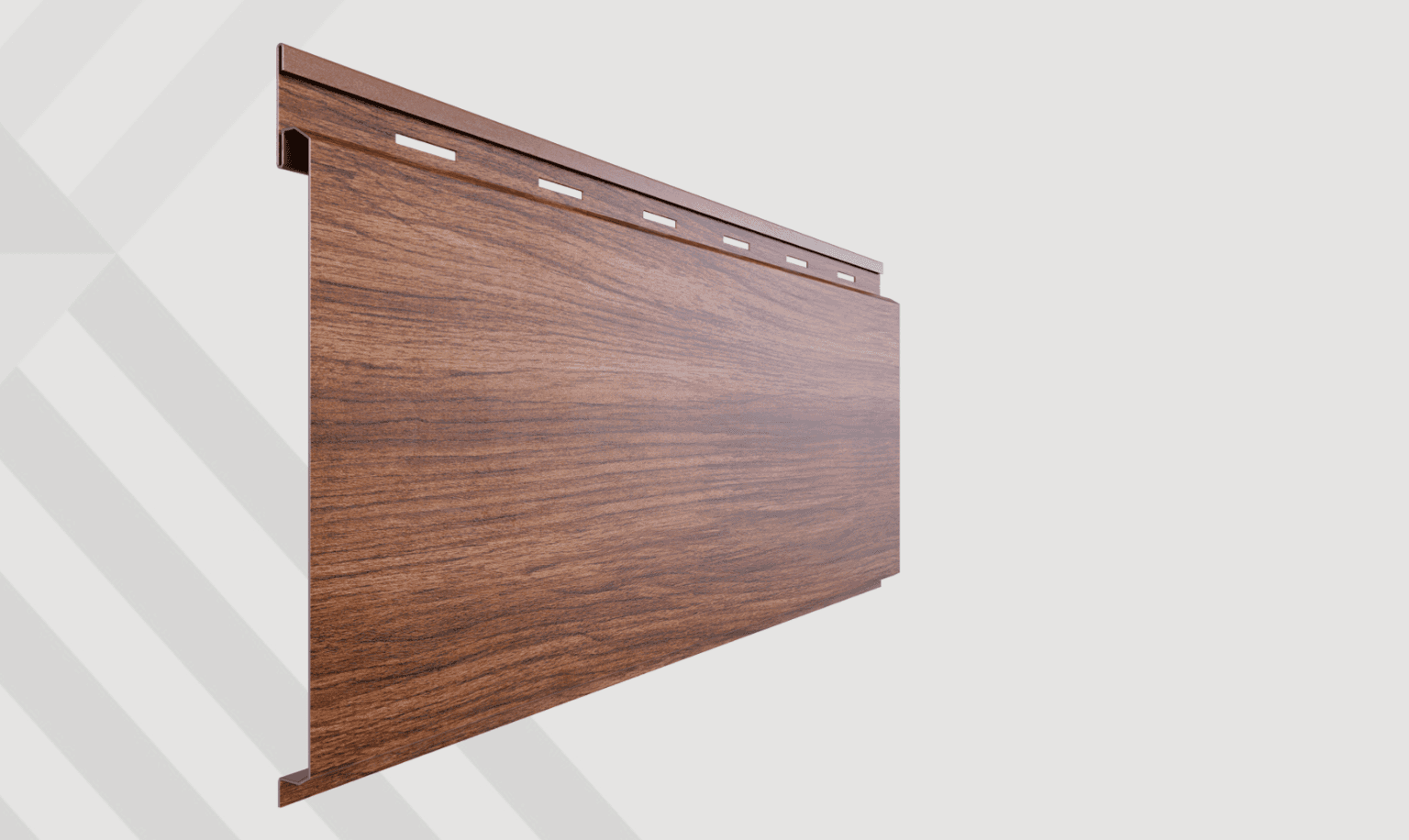
Lap siding – Cladding where boards overlap horizontally, shedding water and defining the home’s rhythm.
Panel cladding – Large flat surfaces of siding that emphasize simplicity and minimal joint lines.
Rainscreen – A drained cavity behind cladding that allows incidental moisture to evacuate and dry.
Ribbed cladding – Vertical siding with repeated ribs that emphasize height and linearity.
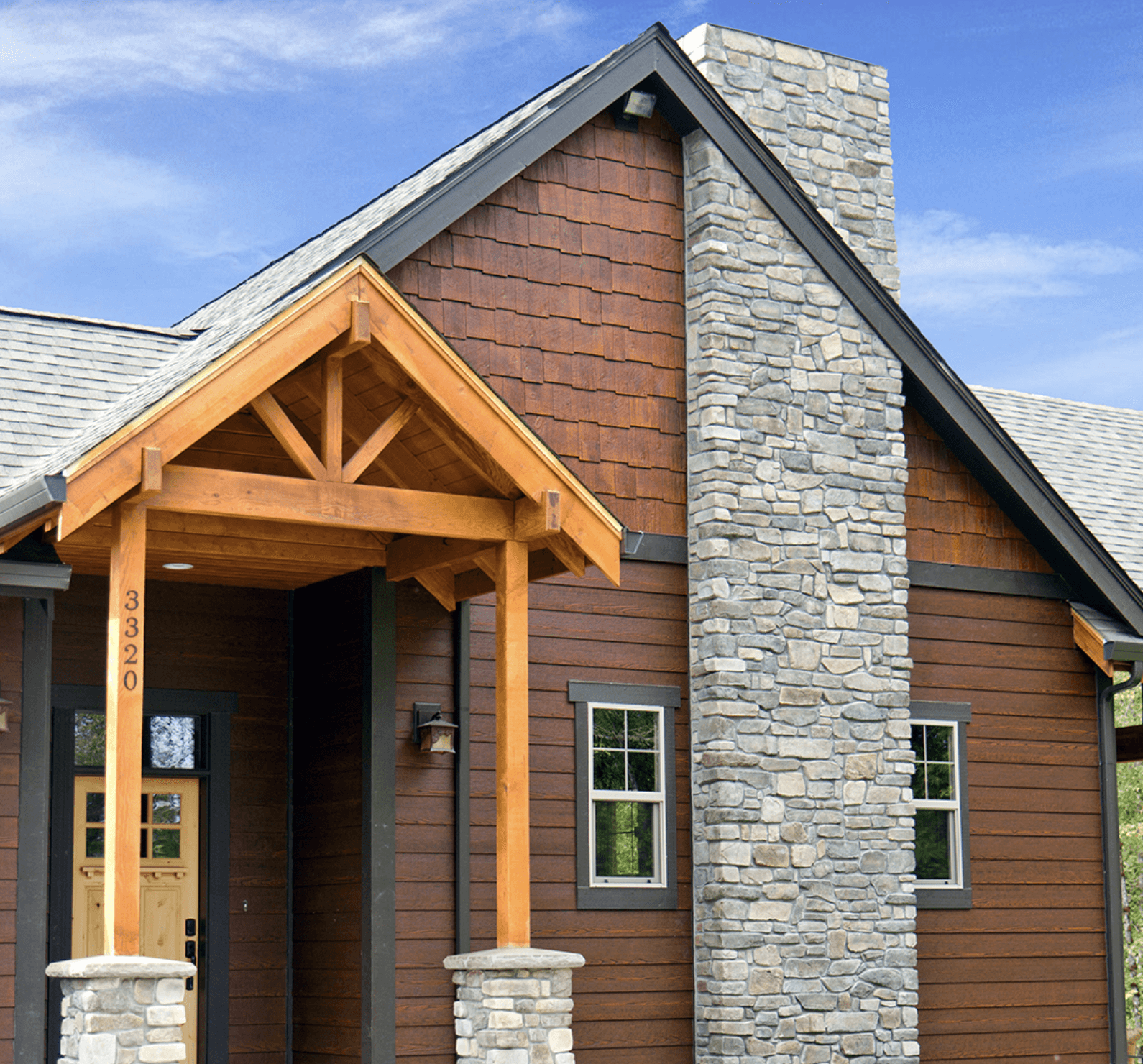
Shingle siding – Individual small units installed in courses, breaking up large surfaces and adding texture.
Starter strip – The first course of trim at the base of a wall or panel assembly that establishes alignment and drainage.
Water resistive barrier (WRB) – A membrane applied under cladding to control water intrusion.
Flashings & Drainage
Box gutter – A concealed or built-in gutter formed within roof framing rather than mounted at the edge.
Counterflashing – A protective flashing installed over step flashing to prevent water from entering behind it.
Cricket (roof saddle) – A small peaked structure built behind chimneys or penetrations to divert water.
Drip edge – Metal flashing at a roof edge that directs water away from fascia and into gutters.
Fascia flashing – Metal or membrane that bridges the joint between roof and wall edges to shed water.
Flashing tape (ledger tape) – Self-adhered membrane used to seal and protect ledger and window connections.
Head flashing – Waterproofed strip installed above windows and doors to divert water away.
Kickout flashing – A small flashing at roof-to-wall intersections that directs runoff away from siding and into gutters.
Ledger flashing – A flashing detail installed above a deck ledger to prevent water from entering the wall assembly.
Rake flashing – Flashing along the sloping edge of a gable roof that prevents water intrusion.
Scupper – An opening in a parapet or roof edge that allows water to drain from a flat or low-slope roof.
Sill flashing – Flashing installed at the bottom of a window to protect the sill and shed water outward.
Step flashing – Individual L-shaped flashing pieces installed in sequence where a sloped roof meets a vertical wall.
Valley flashing – Metal installed in the valley where two roof planes meet to channel water downward.
Roof & Eave Terms
Eave – The lower horizontal edge of a roof that projects beyond the wall.
Fascia – The horizontal board attached to roof trusses/rafters that supports gutters and defines roof edge.
Gable – The triangular upper portion of a wall beneath a pitched roof.
Gutter – The horizontal channel that carries roof runoff to downspouts.
Hip – The sloped intersection of two roof planes forming an external angle.
Ridge – The horizontal peak where two roof planes meet.
Soffit – The undersurface of the roof overhang, often vented to allow attic airflow.
Downspout – Vertical piping that directs water from gutters to the ground or drains.
Window & Door Terms
Argon fill – An inert gas placed between panes of glass to improve insulation performance.
Astragal – The vertical trim or sealing component between paired doors that helps with weather control and alignment.
Awning window – A window hinged at the top that tilts outward from the bottom for ventilation.
Brickmold – Exterior trim around a window or door that bridges the unit and siding surface.
Casement window – A window hinged on the side that swings outward like a door.
Double-hung window – A window with two vertically sliding sashes.
Jamb – The vertical frame members on either side of a window or door opening.
Lite – A single pane or section of glass within a sash.
Low-E glazing – Window glass coated to reduce heat transfer and improve energy efficiency.
Mullion – A vertical or horizontal member that divides adjacent window units.
Muntin – The small bar that divides panes within a window sash, either structural or simulated.
Nailing flange – The flange on a window frame used to fasten the unit to the rough opening.
Picture window – A fixed, non-operable window designed for light and view.
Sliding window – A window with one or more sashes that slide horizontally.
Transom – A horizontal window placed above a door or larger window to add light and proportion.
Window apron – The interior trim board installed directly below the window stool.
Window sash – The framed part of the window that holds the glass and moves (or doesn’t).
Window stool – The interior horizontal trim at the base of a window opening.
Trim & Framing Components
Inside corner trim – Trim where two cladding planes meet internally to create a clean junction.
Outside corner trim – Trim where two cladding planes meet externally to form a crisp edge.
Sill plate – The horizontal framing member at the base of a wall that sits on the foundation.
Window casing – Trim around windows that frames and visually anchors the opening.
Decking & Structural Components
Anchor bolt – A bolt embedded in concrete used to secure framing members such as sill plates.
Beam – Principal horizontal support that transfers deck loads to posts.
Deck fascia board – Trim board at a deck perimeter that hides framing and finishes the edge.
Deck fascia board – A vertical trim board installed at the perimeter of a deck to conceal framing.
Decking board (grooved) – Deck board with grooves on the edge to accept hidden fasteners.
Decking board (square) – Deck board with square edges that can be face-fastened or hidden-fastened.
Face-mount joist hanger – A metal bracket attached to the face of a beam or ledger to support joists.
Grooved deck board – A composite board with side grooves designed to accept hidden fastener clips.
Hidden fastener system – A clip or bracket system used to secure decking boards without visible surface screws.
Joist – Horizontal framing members that carry decking.
Joist hanger – A metal connector that supports the end of a joist at a ledger or beam.
Ledger – The board attached to the house that supports deck joists.
Picture framing (deck) – A border detail around the edge of a deck using perpendicular boards to create a finished edge.
Post – Vertical structural member supporting beams or deck framing.
Post base / post anchor – A metal connector that secures a deck post to concrete while preventing moisture contact.
Riser – The vertical face between treads on a stair.
Ring-shank nail – A nail with ridges along its shaft that increases holding power.
Simpson Strong-Tie – A brand of engineered connectors widely used for framing, joist hangers, and ties designed to maintain structural continuity.
Sloped joist hanger – A joist hanger designed for angled or pitched framing connections.
Square-edge deck board – A composite board with solid edges typically used for picture framing or stair treads.
Strap tie – A flat metal connector used to reinforce framing joints or resist uplift forces.
Stringer – The sloped structural member that supports deck stairs.
Structural screw – A heavy-duty screw designed to carry structural loads in framing connections.
Through-bolt – A bolt that passes completely through framing members and is secured with a nut and washer for strength.
Tread – The horizontal walking surface on a stair.
Exterior Lighting & Accessories
Deck stair lights – Fixtures that improve safety and define steps at night.
Landscape uplights – Ground-mounted lights that wash façades or trees with light.
Soffit pot lights – Recessed lights installed in soffits to illuminate walls or entrances.
Wall sconces – Mounted lights flanking doors or illuminating façades.
Material & Finish Terms
Air barrier – Assembly layer that controls air leakage, often continuous across walls and ceilings.
PVDF finish – A high-performance paint coating commonly used on architectural metal panels for colour durability.
Thermal break – Material added to reduce heat transfer at structural intersections.