What Renovations Can Learn from the CMHC Housing Design Catalogue
What Renovations Can Learn from the CMHC Housing Design Catalogue
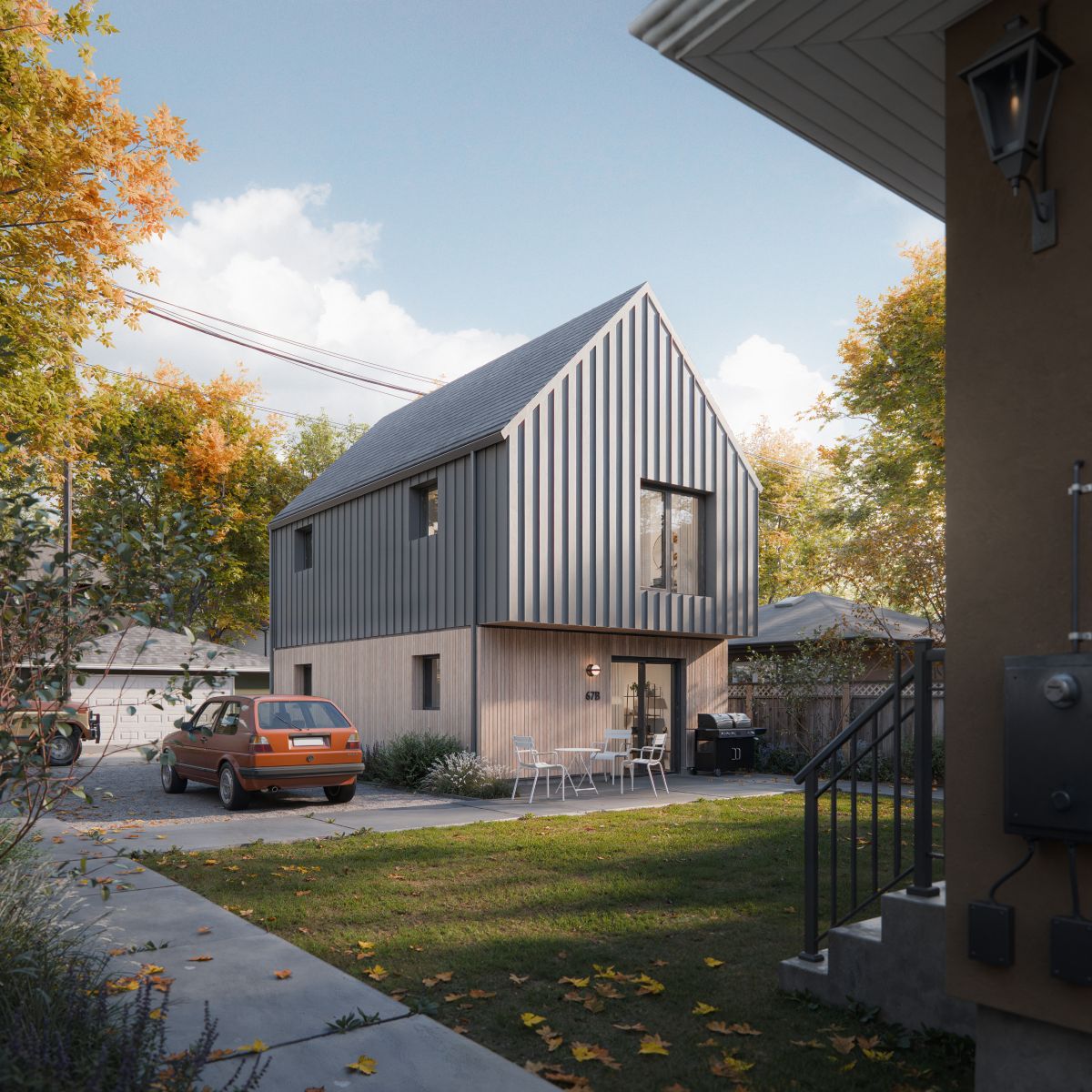
The federal government has recently launched the CMHC Housing Design Catalogue, a public library of standardized housing designs intended to reduce friction in delivering new homes across Canada. The catalogue includes dozens of regionally tailored plans, with technical documentation meant to shorten early-stage design timelines and provide clearer pathways through approvals.
For homeowners in Squamish and the Sea-to-Sky who are planning exterior renovations, the catalogue is worth some attention. It reflects a broader shift in Canadian housing toward clearer documentation, more systematized building assemblies, and rising expectations around performance. Those same forces are beginning to shape renovation work, even when the project is focused on an existing home. They also tell a story about what neighbourhoods are going to look like in the years ahead.
What Happened
The Housing Design Catalogue is intended to make housing delivery more predictable by offering designs that already reflect regional construction norms and code pathways. CMHC describes it as a tool to reduce design and approval barriers by providing a vetted starting point for common housing forms.
These designs are not turnkey and still require adaptation by qualified professionals to meet zoning, site, and local building requirements before they can move through permitting.
Why This Matters in Squamish
Most local housing stock was built decades ago, often with insulation levels and envelope detailing that reflect a different era of construction.
In that context, exterior remodels are rarely just cosmetic. Even when homeowners begin with a straightforward goal — new siding, better windows, a refreshed façade — the work inevitably touches deeper questions about moisture management, air leakage, insulation continuity, and how the building dries.
The catalogue does not address renovations directly, but it does highlight a housing culture that is moving toward clearer systems thinking. That shift matters for homeowners planning major exterior work.
Siding Renovations Often Begin Simply — and Become More Complex
Many exterior projects start in a self-explanatory way: “We want to re-side the house”. That’s a good start but it’s not a complete scope.
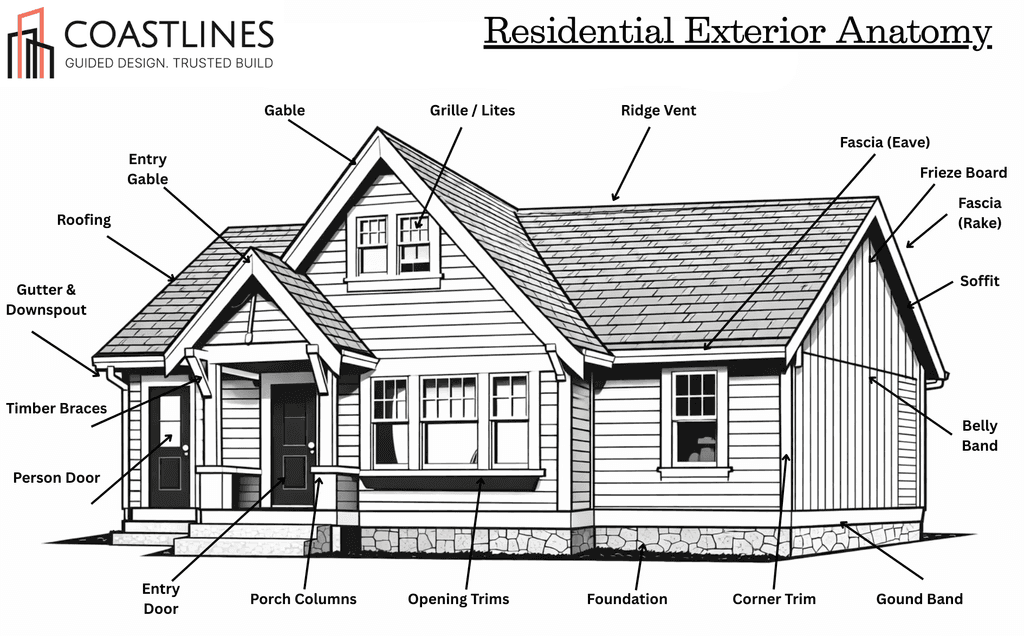
The challenge is that exterior assemblies are layered systems. When cladding comes off, a discovery period begins: what condition is the water-resistive barrier in, how are windows integrated, is there a rainscreen, what drying potential exists, and what upgrades are practical without rebuilding the entire wall.
This is one reason renovation projects can feel harder to price and schedule than homeowners expect. It is not usually because anyone is hiding the ball but just because so many decisions live behind the siding, and they benefit from being clarified early rather than solved in the field.
What the Catalogue Model Suggests
The federal premise behind the catalogue is that housing moves faster and more predictably when the design intent is established early and the documentation reduces unknowns.
Even though a homeowner renovating a 1980s split-level in Valleycliffe is not selecting a catalogue plan, the underlying lesson still applies. Exterior projects tend to run more smoothly when the work is approached as an envelope and detailing strategy, not only as a finish replacement.
Exterior Performance Expectations Are Steadily Becoming More Normal
Another signal embedded in the catalogue is that modern housing design emphasizes higher baseline performance: energy efficiency, climate resilience, and durability are part of the starting point, not special upgrades. (Around ¾ of our Squamish homes in 2024 and 2025 added continuous insulation underneath the siding, as an example.)
Homeowners often treat building performance as something separate from exterior design. But policy direction suggests that performance language will continue moving into the mainstream, and renovation conversations will increasingly include questions about airtightness, insulation continuity, and moisture control.
In Squamish, not to mention Whistler, where exterior exposure is intense, this culture shift will be a welcome change.
Standardization Still Requires Local Judgment
One of the more practical aspects of the catalogue is its emphasis on adaptation. CMHC is clear that designs must still be modified for local site conditions, zoning, and code requirements.
That mirrors renovation work closely. Squamish houses are rarely standard: steep sites, complex rooflines, shaded north elevations, heavy snow zones moving toward Whistler, and decades of past alterations all shape what is possible and what is needed.
The value in exterior renovation is not copying generic assemblies, but in adapting best practices for the unique combination of home and homeowner.
Documentation and Scope Questions for Homeowners to Ask Contractors
Catalogue housing is partly about reducing ambiguity through repeatable documentation. Renovations often struggle when scope is defined loosely and assumptions remain unstated.
Homeowners benefit from asking early questions such as: does siding replacement include rainscreen correction, how will windows be integrated into the water control layer, what is excluded from the scope, and what unknown conditions are being carried as contingencies.
Clear scope lists can look like pages of ‘fine print’ but they are essential to a well managed project that feels fun all the way through.
What Homeowners Should Watch For Next
The Housing Design Catalogue is part of a larger direction in Canadian housing: more standard pathways, clearer performance expectations, and less reliance on improvisation.
For homeowners planning exterior renovations in Squamish, the practical implication is that thoughtful preconstruction work — defining scope, sequencing envelope decisions, and documenting key details early — will matter more over time, not less.
Even if you never build from a catalogue plan, the direction is clear. Exterior renovation work tends to be more predictable when it is planned with system intent before the siding comes off.